

SENSORY SENSITIVITY • COMFORT • LOWER STIMULATION
Gifts & Support for Sensory-Sensitive People
Thoughtful gifts chosen around sound, light, texture, scent, temperature, and other sensory preferences—designed to make everyday life more comfortable without asking someone to simply tolerate more.
SENSORY-SENSITIVE GIFT GUIDES
Start With What Feels Better
Sensory sensitivity looks different for every person. Begin with what they avoid, adjust, remove, or reach for when they want to feel more comfortable.
Sound & Hearing Comfort
Helpful options for reducing unwanted noise and creating a more comfortable listening environment.
Explore Sound Comfort→
Texture, Scent & Body Comfort
Thoughtful choices around fabrics, clothing, scents, temperature, and other sensations that can affect everyday comfort.
Explore Body & Texture Comfort→
Light & Visual Comfort
Gentler lighting, visual supports, and practical ways to reduce uncomfortable brightness or visual stimulation.
Explore Light & Visual Comfort→
Sensory Overload & Recovery
Low-demand comforts and practical supports for moments when the world has simply become too much.
Explore Overload & Recovery→
A LITTLE LESS NOISE
Sound & Hearing Comfort
Sound preferences can vary enormously. The goal is not complete silence—it is giving someone more control over what they hear, when they hear it, and how much sound feels manageable.

Noise Reduction & Quiet
Headphones, ear protection, and other options that help reduce competing or uncomfortable sounds.
Comfortable Listening
Headphones, speakers, and listening comforts chosen around the person’s preferred volume, fit, and sound experience.
Quiet on the Go
Portable options for school, work, errands, travel, events, and other noisy environments.
Familiar & Predictable Sound
Music, white noise, familiar audio, and other sound experiences the person already finds comfortable or enjoyable.
SOFTER ON THE EYES
Light & Visual Comfort
Bright light, glare, flashing, clutter, or busy visual environments can be uncomfortable for some people. Thoughtful gifts can offer more choice over how a space looks and feels.
Softer Lighting
Lamps, adjustable lighting, and gentler options for creating comfortable brightness.
Screen & Workspace Comfort
Helpful tools for managing glare, brightness, visual clutter, and frequently used spaces.
Visual Simplicity
Low-clutter organizers, calming surroundings, and practical ways to make important things easier to see without adding more visual noise.
Light Control on the Go
Portable options for bright stores, classrooms, offices, travel, outdoor spaces, and other environments.
COMFORT STARTS WITH PREFERENCE
Texture, Scent & Body Comfort
Something that feels wonderfully soft, warm, or fragrant to one person may be uncomfortable to another. Begin with the fabrics, temperatures, scents, and sensations the person already prefers.
Soft & Familiar Textures
Blankets, pillows, bedding, and other comforts chosen around textures the person already enjoys.
Clothing & Wearable Comfort
Soft, practical options that consider seams, fabric, fit, pressure, tags, and other personal clothing preferences.
Scent-Sensitive Choices
Unscented or gently chosen options for people who prefer less fragrance or are particular about the scents around them.
Temperature & Body Comfort
Useful comforts for people who prefer being warmer, cooler, or better able to adjust their environment.
WHEN THE WORLD FEELS LIKE TOO MUCH
Sensory Overload & Recovery
Sometimes the most helpful support is not another activity or solution. It is less noise, less light, fewer decisions, familiar comfort, and room to recover in the person’s own way.
Reduce the Input
Simple supports that can make sound, light, visual activity, or other stimulation easier to manage.
Low-Demand Comfort
Comforts that require little conversation, decision-making, setup, or response.
Familiar Recovery
Favorite textures, activities, objects, sounds, and routines that can make recovery feel more predictable.
Portable Recovery Support
Small, easy-to-carry comforts for school, work, travel, appointments, events, or unexpectedly overwhelming days.
MORE WAYS TO EXPLORE

Sensory Seekers
Autism

ADHD Kids & Teens

All Sensory & Neurodivergent
PERSON FIRST, ALWAYS
Comfort Is Not Something They Have to Earn
Sensory discomfort does not need to be justified before it deserves consideration. A thoughtful gift respects what the person already knows about their own body and environment.
Choosing Sensory-Sensitive Gifts Without Guessing
Something marketed as “calming,” “sensory-friendly,” or “soothing” is not automatically right for every person. Begin with what you already know about what they enjoy, avoid, adjust, and choose for themselves.
Read: What NOT to Gift Someone With ADHD or Sensory Sensitivities →
Read: How to Choose Sensory-Friendly Gifts for Autism & ADHD →
Read: Gifts for Sensory-Sensitive People: Quiet, Light, Texture & Recovery →
Sometimes Less Really Is More
Some people spend a great deal of energy moving through sounds, lights, textures, smells, crowds, conversations, and environments that other people barely notice.
A thoughtful gift does not need to make them better at tolerating those things.
Sometimes care looks like making one part of the world a little quieter, softer, dimmer, more predictable, or easier to control.
The best support respects what their body is already telling them.
Let the gift quietly say:
“I noticed what helps you feel comfortable.”
Heart to Heart Giving
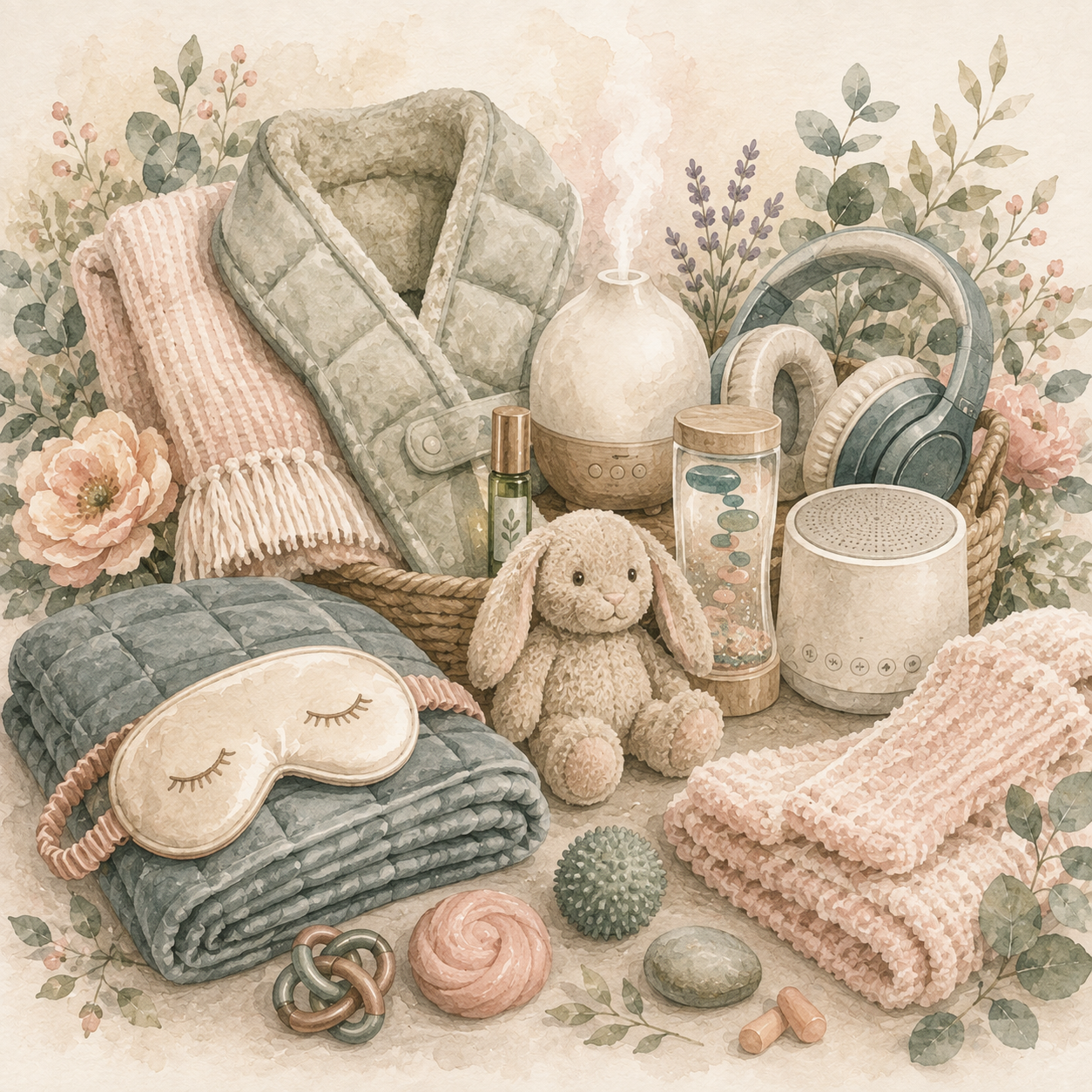
A-Tisket, A-Tasket a Gift in my Basket

Gift Baskets
Can Send Today

Thoughtful Gifts Under $25